Description
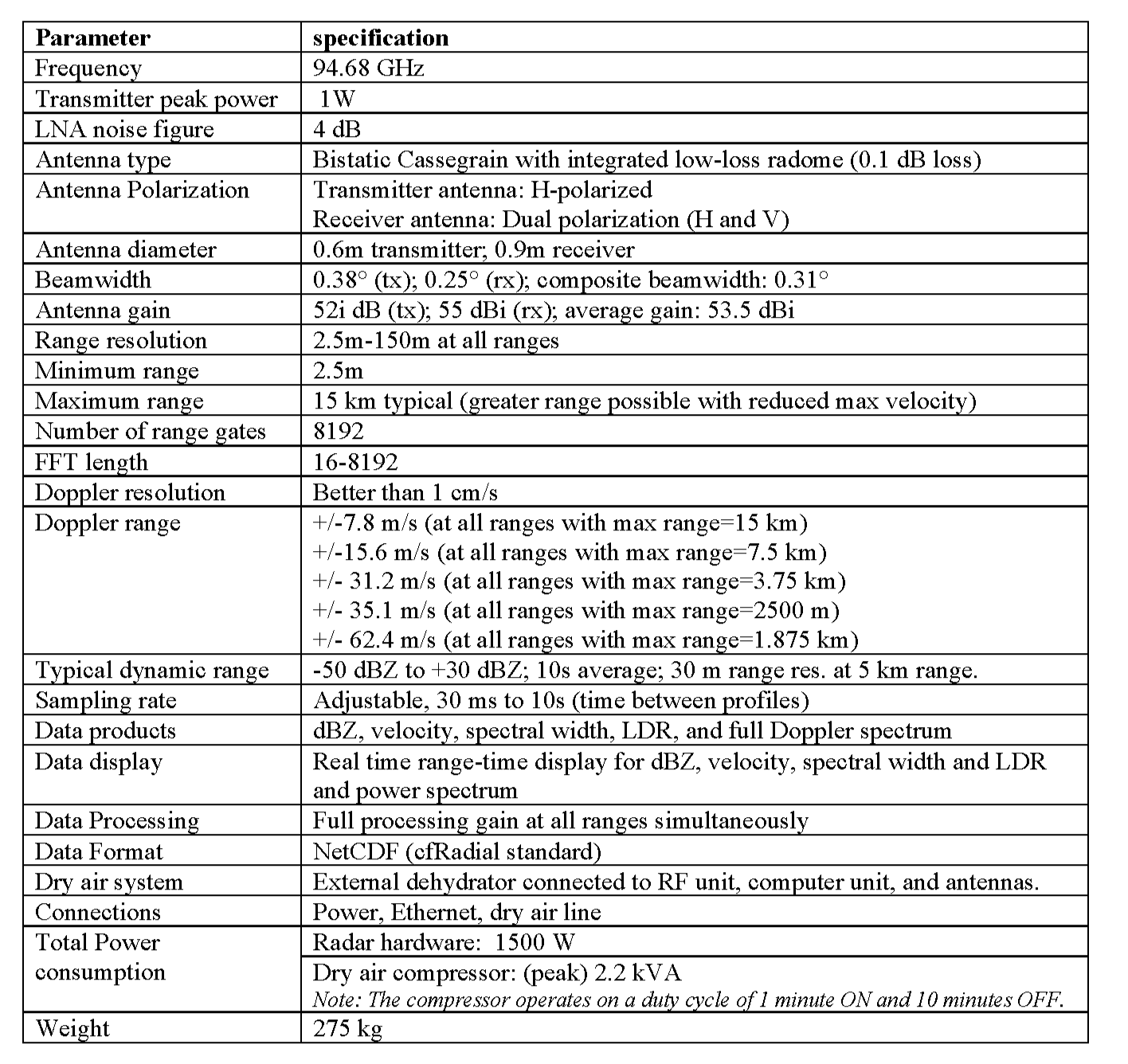
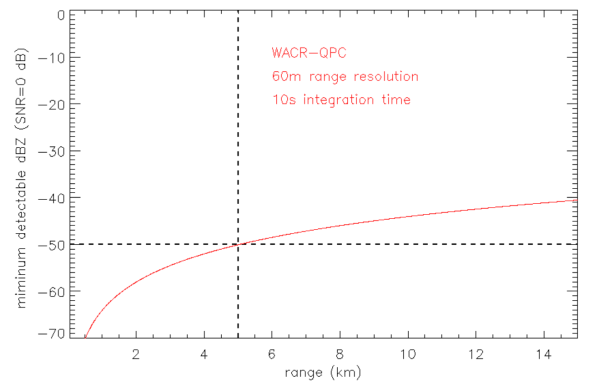
The zenith pointing W-band Cloud Radar (Model WACR-QPC), is shown in Figure 1. WACR-QPC uses a phase coding technique which is similar to conventional FMCW radar. QPC mode has several advantages over FMCW processing, including superior range sidelobe performance and optimal processing gain at all ranges. This technique is described in a recent publication by ProSensing [1]. To maximize sensitivity, the radar transmits 100 percent of the time. This requires separate antennas for the transmitter and receiver. Specifications for WACR-QPC are summarized in Table 1. The WACR-QPC’s sensitivity with 1 second integration time is plotted in Figure 2.
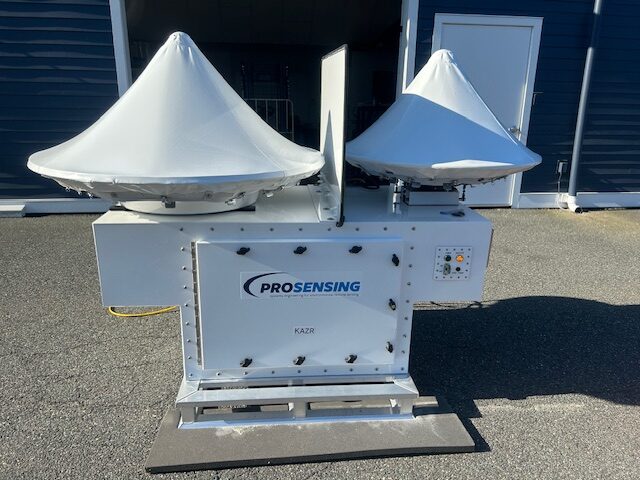
Figure 1. QPC-mode dual polarization W-band cloud radar.
• Data Products
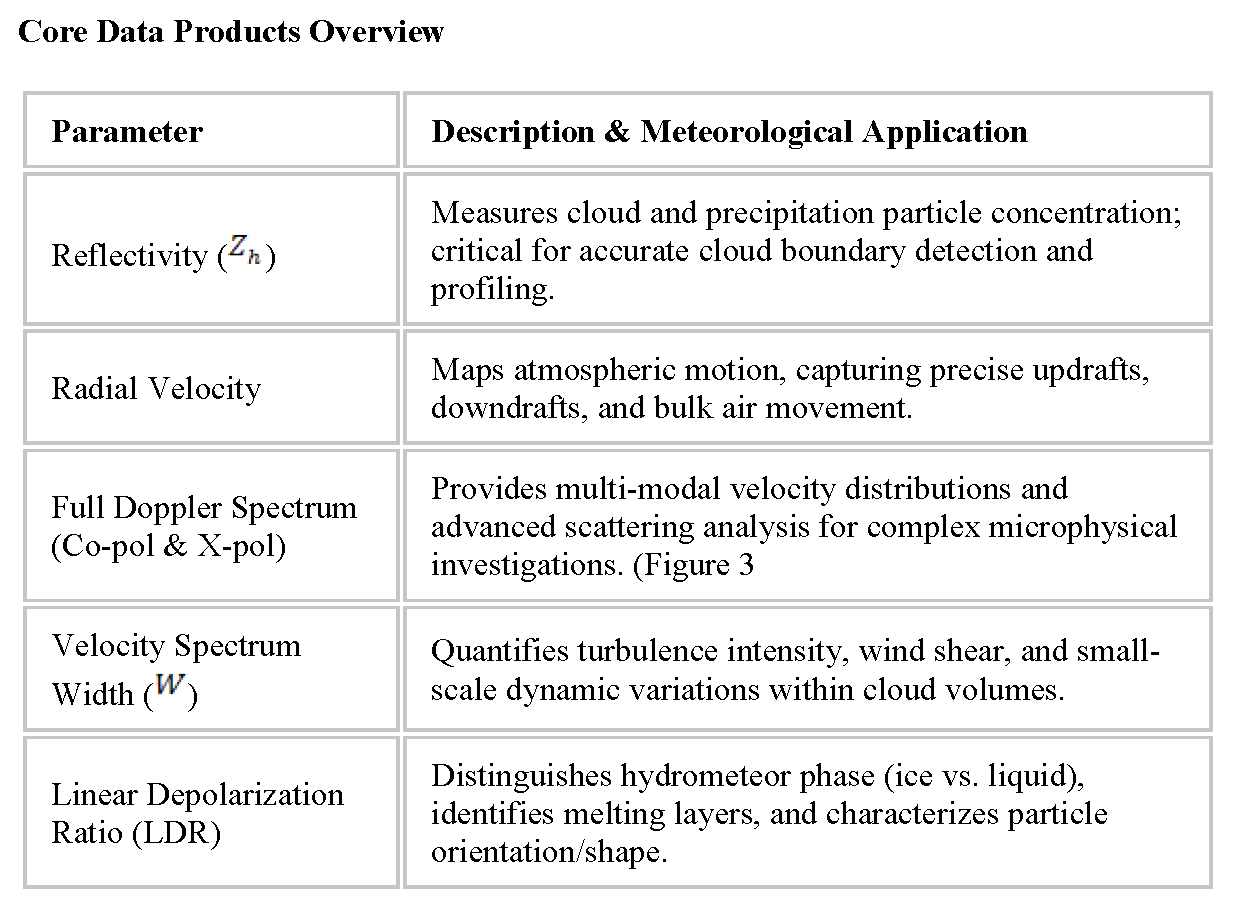
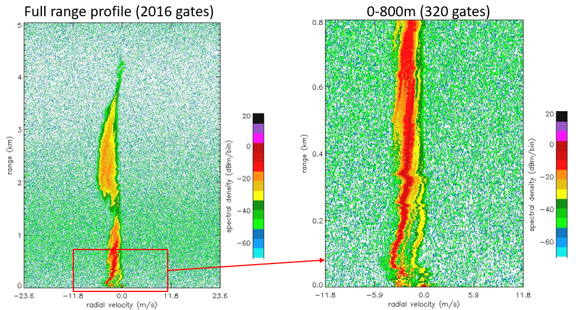
WACR-QPC data products are summarized in Table 2. Example power spectra data measured at 2.5m range resolution in light rain is shown in Figure 3.
• System Software
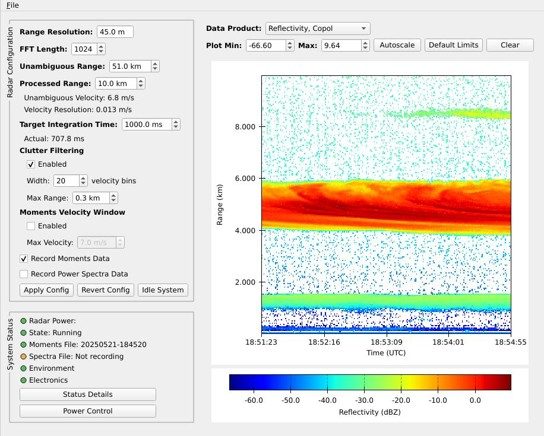
The system software for WACR-QPC is designed to take full advantage of multi-processor PCs with the processing load distributed equally among all processors. The software performs a variety of data processing functions, including signal decoding, clutter filtering, continuously updated noise estimation, power spectra computation, (FFT) processing, spectral moment estimation and calibrated dBZ computation. A graphical user interface (GUI) is provided for system control and real-time data display. The WACR-QPC control and display GUI is shown in Figure 4.
Separate data files are stored for raw I/Q data, power spectra, and spectra moments (dBZ, velocity, spectral width, and LDR. Data is stored in NETCDF format, which can be read by a variety of commercial software products.
• WACR-QPC System Website
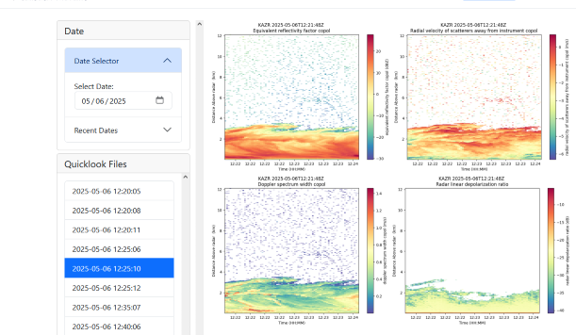
The WACR-QPC system includes a website for system control, display of built-in test data and quick look images for each stored data file. The page for displaying quick look plots is shown in Figure 5.
Auxiliary Systems
• WACR-QPC Network
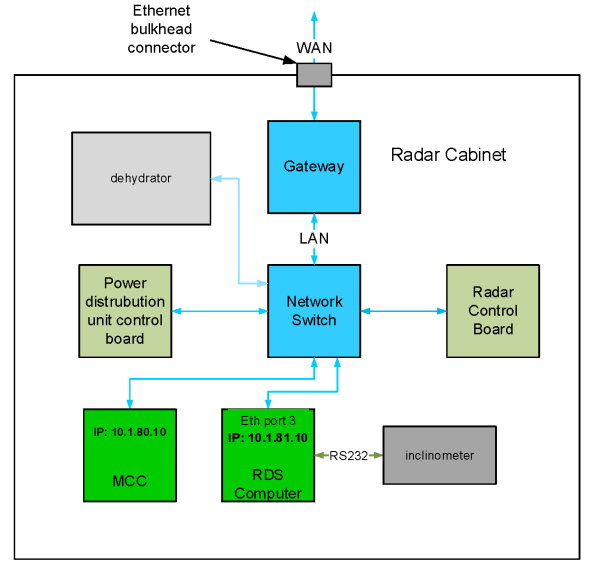
The WACR-QPC system network diagram is shown in Figure 6. The network provides remote control of system power and monitoring of the radar and dry air system.
• Dry Air System
WACR-QPC includes an external dry air compressor to prevent condensation of the electronics and antennas.
References
[1] J.B. Mead and A.L. Pazmany: Quadratic phase coding for high duty cycle radar operation. J. Atmos. Ocean. Technology, 36(6), June 2019, 957-969. https://journals.ametsoc.org/doi/pdf/10.1175/JTECH-D-18-0108.1[2] Ground-Based W-Band Radar (WACR-QPC):
- ProSensing’s radar operated by Stony Brook University (NY), detailed in the article “Peering into Cloud Physics Using Ultra-Fine-Resolution Radar and Lidar Systems”, published in the Bulletin of the American Meteorological Society, issue NOVEMBER 2024